.png)

Every artist who opens Poser starts with the same spark: the desire to create something that feels alive. But while technical skill can make an image beautiful, it’s storytelling that makes an image unforgettable. A well‑told visual story pulls the viewer in, stirs emotion, and leaves them wondering what happened just before — or what might happen next.
If you want your Poser renders to resonate on that deeper level, the secret is simple: think like a storyteller first, and a technician second.
Let’s explore how to do exactly that.
If you want your Poser renders to resonate on that deeper level, the secret is simple: think like a storyteller first, and a technician second.
Let’s explore how to do exactly that.
Start With the Human Element
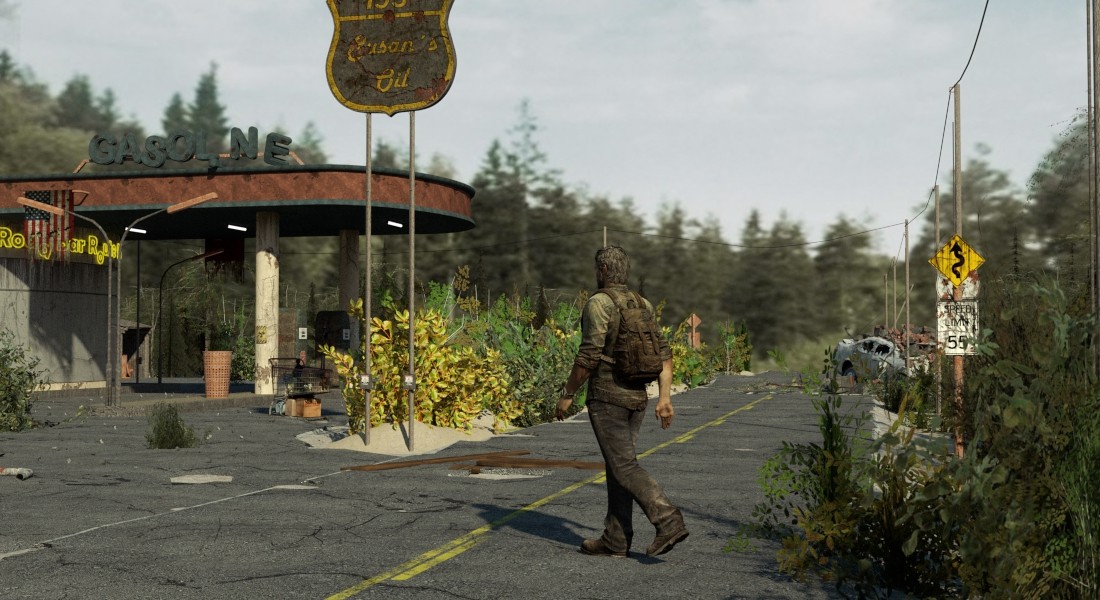
Even the most breathtaking environment feels hollow without a sense of life. The human element — a character, a gesture, a trace of presence — is what gives a scene its emotional anchor. The viewer instinctively looks for a character to connect with, someone whose experience anchors the scene even if they are not the main focus in an environment-heavy scene.
Sometimes even the hint of a human presence is enough: a coat draped over a chair, a shadow stretching across the floor. These small cues invite the viewer to imagine the person behind them.
Don’t Let Technical Details Steal the Spotlight
Poser is a playground of tools — shaders, lights, materials, render engines — and it’s easy to fall down the rabbit hole of the technical side of creation. But the story should always come first.
Before adjusting a single setting, ask yourself:
What moment am I trying to capture?
If your story is about a thief sneaking into a vault, the tension in their posture matters more than the perfect metal texture on the vault door. If your story is about a child discovering something magical, the wonder in their expression is more important than the exact number of samples in your render.
Technical polish enhances a story. It should never replace it.
Give the Viewer the Three Essentials: Who, Where, What
One of the simplest ways to strengthen your storytelling in Poser is to make sure the viewer can immediately grasp three things:
Who is the focus of the moment
Where the scene takes place
What is happening right now
These elements act like visual signposts and that clarity is what transforms a technically good image into a compelling narrative. The viewer doesn’t have to work to understand the scene — they’re drawn into it naturally.
Expressions: The Heartbeat of Your Story
Emotion is the most powerful storytelling tool you have. A character’s expression — subtle or intense — communicates what words cannot.
Poser’s expression controls let you fine‑tune the smallest details: the tension in the jaw, the lift of an eyebrow, the softness of a smile. These micro‑expressions make your characters feel alive.
Lighting amplifies emotion.
Warm light can make a hopeful moment glow.
Cold light can make the same expression feel uncertain or eerie.
Interactions Bring Stories to Life
Characters don’t exist in isolation. What makes a scene feel alive is the way a character engages with the world around them — with others, with objects, with their environment and this is what will move your story forward.
Even something as simple as a character pausing with their hand hovering over a door handle can communicate hesitation, fear, or anticipation.
Composition: Let Every Element Serve the Story
A busy background can turn your story into visual static, while a thoughtful, intentional layout makes your message ring loud and clear. Think of every object in your frame as an actor. If it doesn’t contribute to the scene, it doesn’t get a role. When you let composition play its part, your story becomes clearer, richer, and far more fun to create.
Experiment With Angles and Shots
Experiment With Angles and Shots
One of Poser’s greatest strengths is the freedom to explore your scene from any angle. Don’t settle for the first camera position you try. Move around. Tilt the camera. Zoom in. Zoom out. Render multiple versions and choose the one that tells the story best.
Poser offers exceptional control over characters, lighting, environments, and composition — the essential building blocks of any visual scene. But its true strength emerges when those tools are used with purpose. A well‑crafted render invites the viewer to pause, interpret, and connect. That is the real power of storytelling in Poser, and it’s what transforms a strong image into a memorable one.