.png)
Action poses such as running, climbing, jumping, etc. are where Inverse Kinematics really shines in Poser.
When a figure needs to stay connected to the ground or anchored to a surface, IK helps you maintain believable contact and natural limb behavior while you shape the motion. Instead of wrestling with every joint to keep a foot planted during a stride or a hand gripping a ledge during a climb, IK lets you focus on the flow of the pose. All aspects of a pose like the weight shift, the stretch, the tension, the direction of movement are calculated.
It’s a powerful way to build dynamic, grounded action poses that feel intentional and physically convincing.
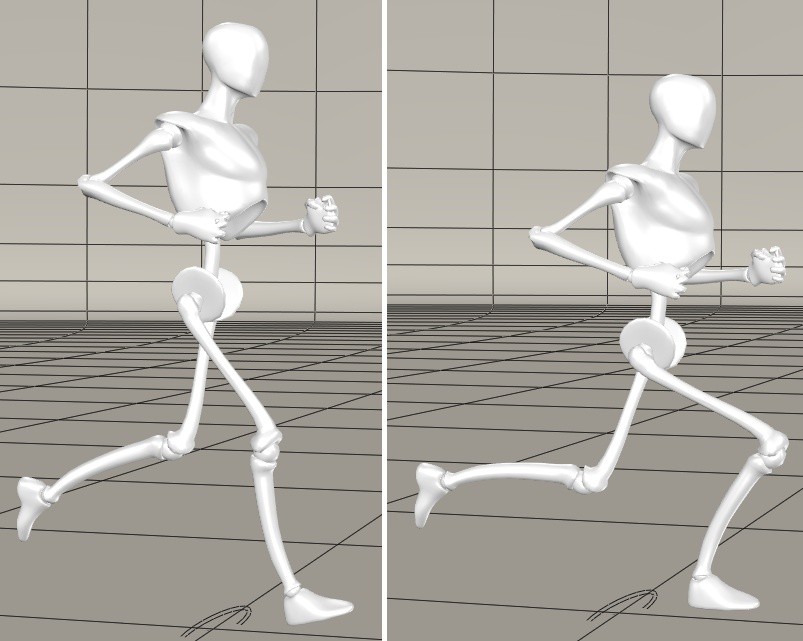
In this example we have a casual running pose but with IK turned on for the Legs a minor adjustment like lowering the YTrans on the Hip results in a more "lunging forward" position making it seem all that more urgent.
Ready‑made poses are a great starting point, but they rarely fit a scene perfectly especially when you need a character to interact with specific surfaces, props, or angles.
Tweaking them is essential for believable storytelling, and that’s where IK becomes invaluable. By locking hands, feet, or other contact points in place, IK lets you adjust the rest of the body without breaking those crucial anchors. The result is a pose that keeps the original structure but adapts naturally to your environment, making the action feel grounded, and convincing.
Here is a pre-made Climbing pose.
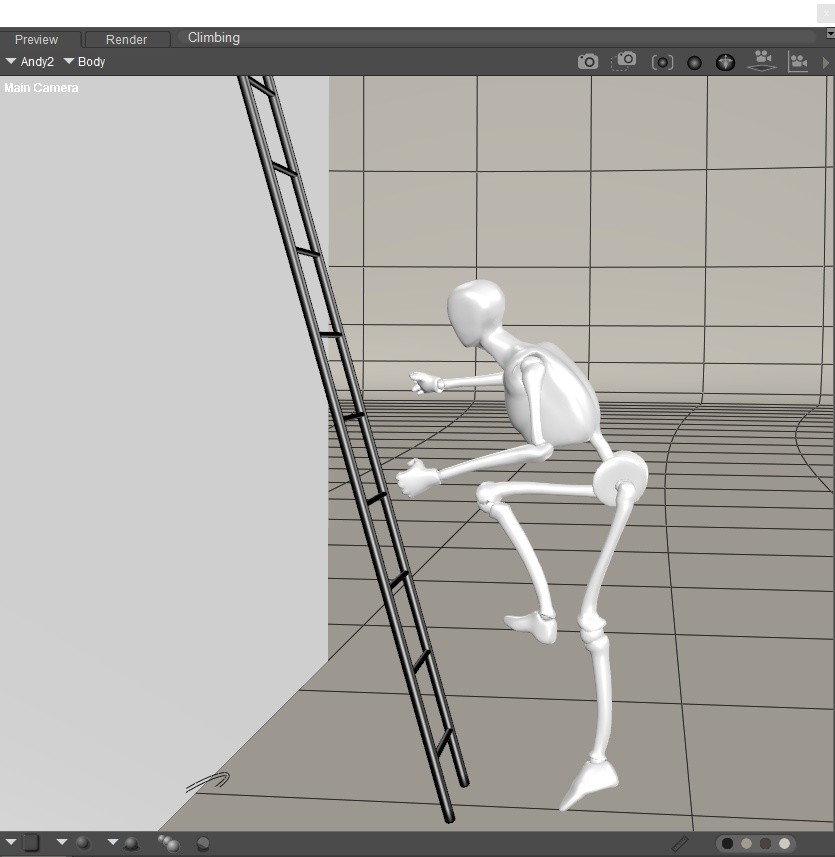
And here Andy has been positioned on the ladder.
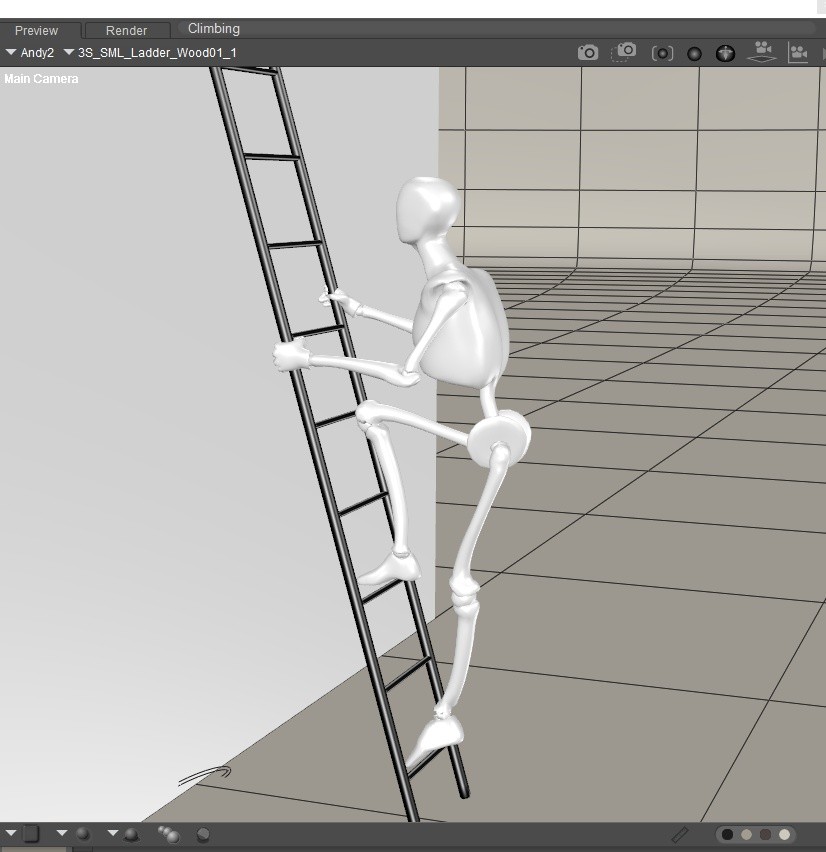
Besides having IK on the Legs we will now turn it on for the Hands as well and see what happens. Turn on IK either from the menu or with the other methods we looked at in Part 1.
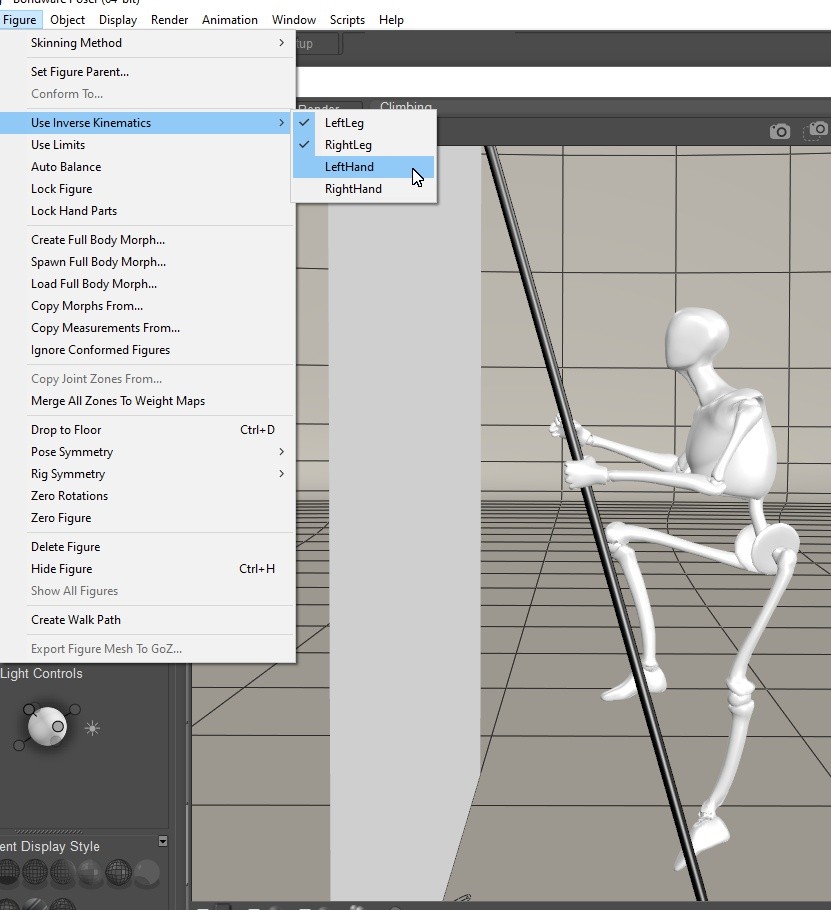
If you navigate to the Object menu with one of the hands selected you'll now see the option to 'Change Parent' that was not available before.
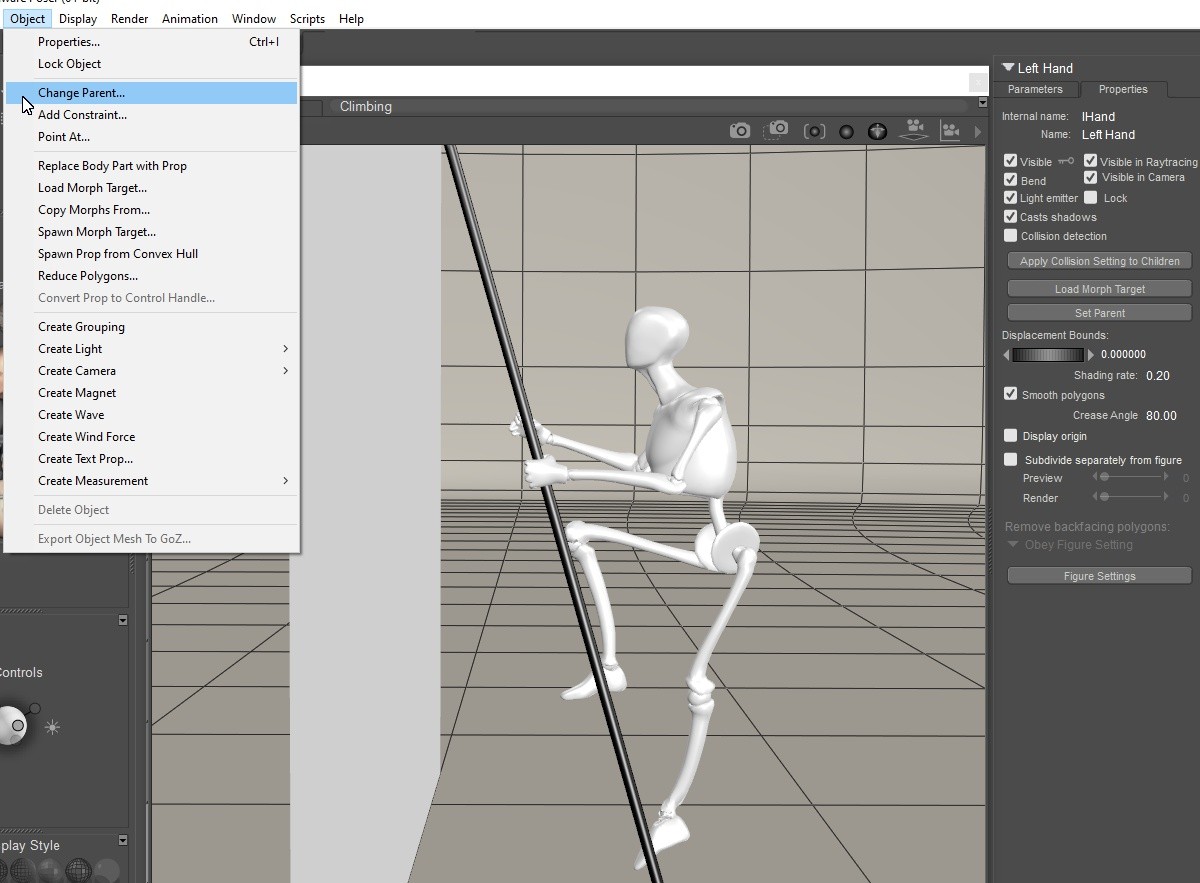
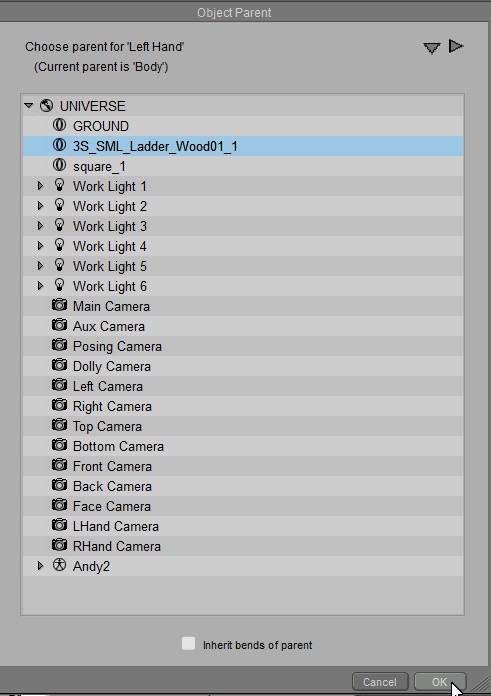
You can now select the prop where you'd like to 'anchor' Andy's hands, in this case the ladder.
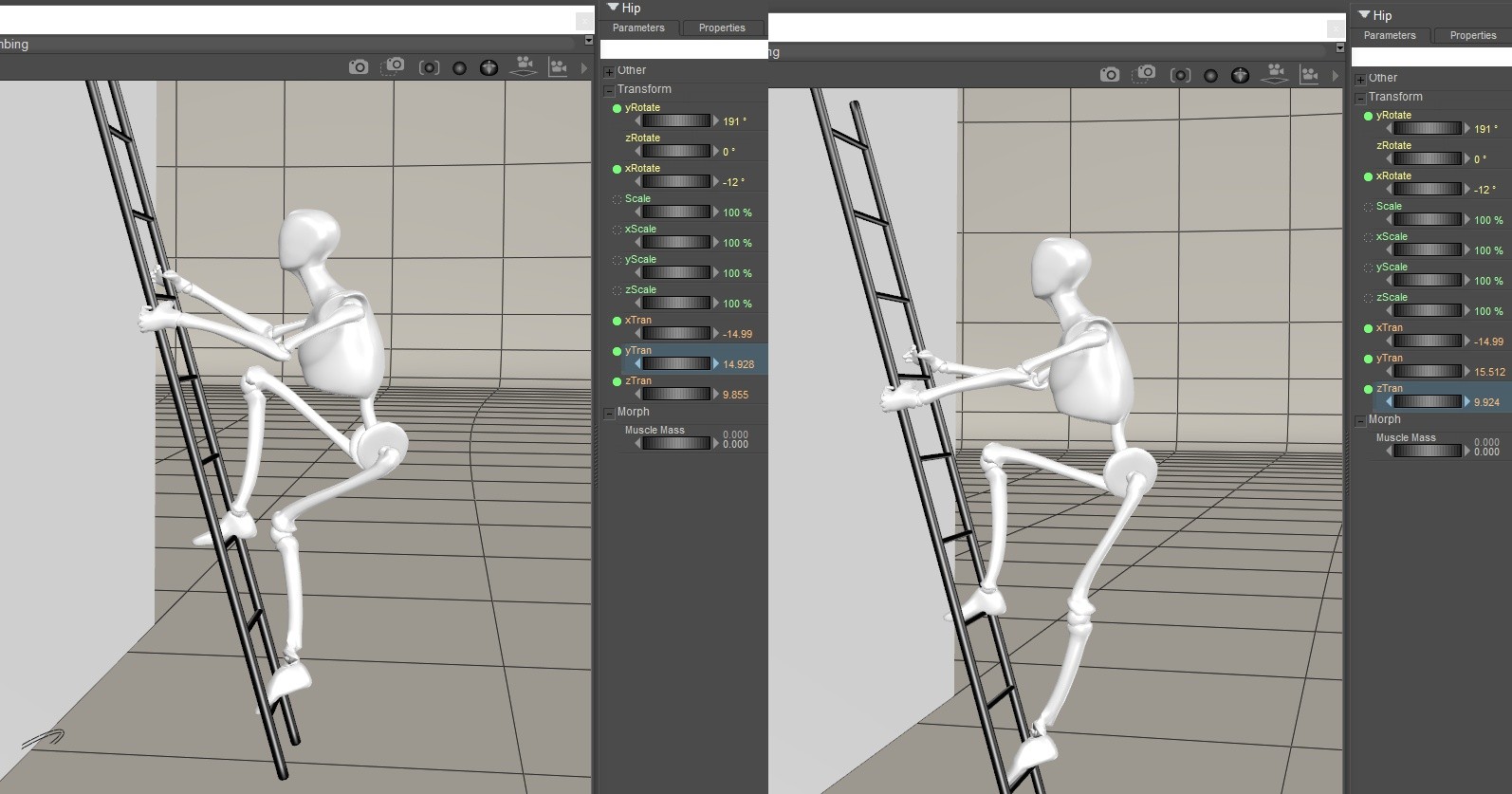
As with the Running pose, we can now use the Translation dials on the Hip to obtain different results depending on what our scene calls for.
You can see the effects the YTrans and ZTrans have had on the pose while at the same time positioning the limbs realistically with no other effort on our part.
As you work with action poses, let IK handle the technical aspects so you can focus on the movement and storytelling.
Keeping hands, feet, or contact points locked in makes it easier to shape dynamic, grounded poses that feel natural. With a bit of practice, IK becomes a reliable tool for building confident, energetic action scenes!